What causes it
Most lower back pain comes from the muscles, ligaments, discs and small joints of the lumbar spine being irritated or overloaded, rather than from damage. Doctors call this non-specific back pain. It is very common, it hurts a great deal, and the majority of episodes improve substantially within six weeks.
A smaller group of people have a specific cause: a disc pressing on a nerve, a stress fracture in a young athlete, inflammatory back pain, or rarely something more serious. Part of my job is making sure those are not missed.
Why a scan can mislead
MRI scans of people with no back pain at all regularly show disc bulges and wear, and the proportion rises with age. Finding one on your scan doesn’t mean it is the source of your pain. A scan ordered too early can lead to worry and to treatment aimed at the wrong thing.
I request imaging when the history or examination suggests a specific cause, when pain is not improving as expected, or before any procedure.
Most backs need a clear explanation and a plan to load them again. Very few need a scalpel.
How I assess it
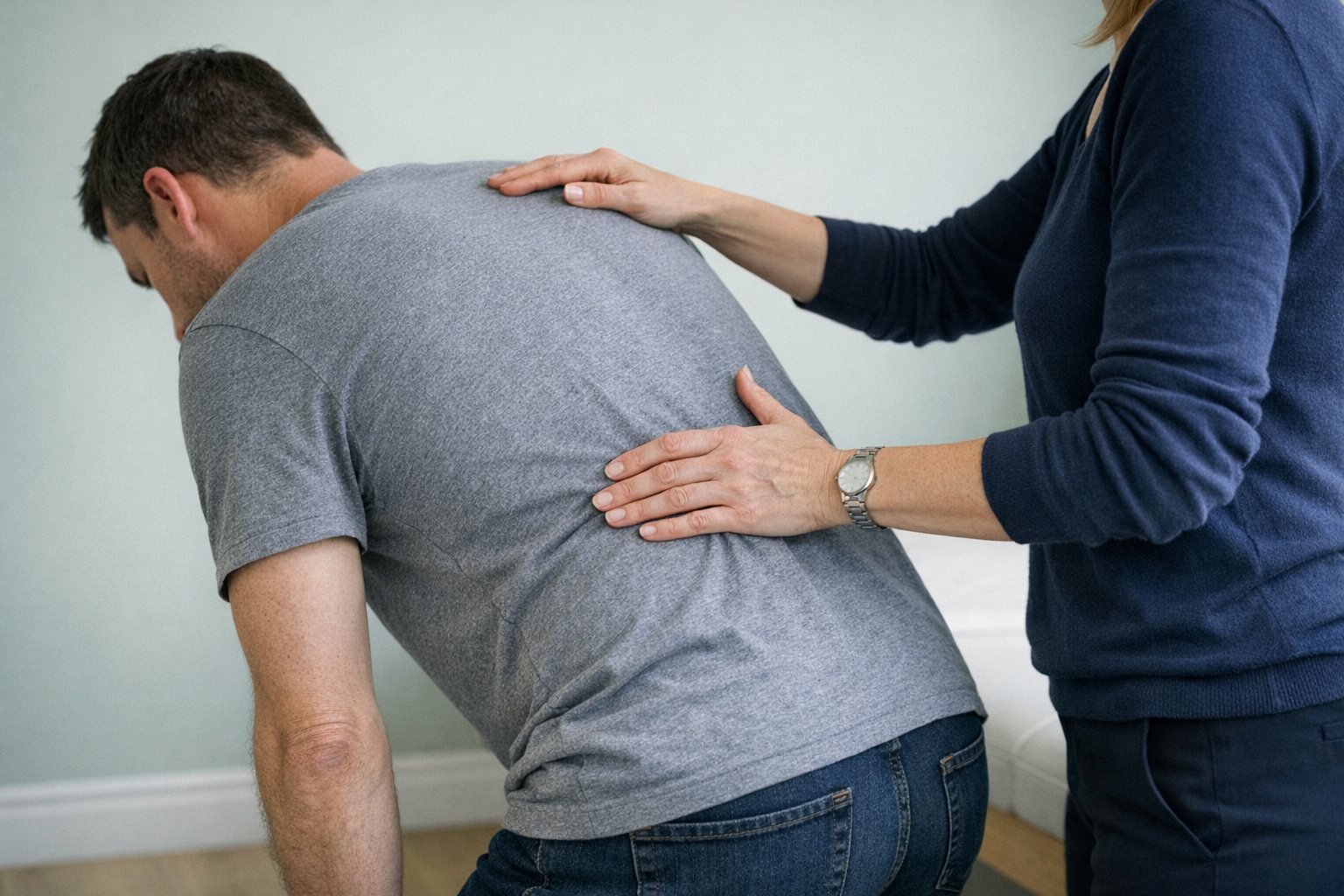
I ask how the pain started, what eases and worsens it, how you sleep, what you do for work and exercise, and about general health. I examine the spine, hips and nerves in the legs. By the end of the appointment you’ll know which group your pain falls into and what that means for you.
Treatment
Keep moving
Bed rest slows recovery. Staying active, even at a reduced level, is the most useful single thing you can do in the first weeks.
A graded exercise plan
Exercise is the treatment with the best evidence for lasting improvement. I set a programme matched to your pain, your work and the sport you want to get back to, and adjust it as you progress.
Medicines, used briefly
An anti-inflammatory for a short period can help you move while the pain is at its worst, if it is safe for you. Strong painkillers and long courses are rarely helpful for this kind of pain.
Injections and referral
For specific causes, such as a nerve root irritated by a disc, a guided injection can settle pain enough to restart rehabilitation. I refer to a spinal surgeon only when the findings call for it.
Back to work and sport
Most people can keep working with small changes to how long they sit and how they lift. For runners and gym-goers I give you specific steps for building back up, so you don’t stop completely or rush back.

When to get help urgently
Go to A&E straight away if back pain comes with numbness around the genitals or buttocks, new difficulty passing urine or controlling your bladder or bowels, or weakness in both legs. These can be signs of cauda equina syndrome, which needs emergency treatment. See a doctor the same day if you have a fever, a history of cancer, unexplained weight loss or pain after a significant fall.
Questions patients ask
How long will my back pain last?
Most episodes improve a great deal within two to six weeks. If it isn’t improving by then, or keeps returning, it is worth a specialist assessment.
Should I see a physiotherapist or a doctor first?
Either is reasonable. See a doctor first if the pain is severe, came on after an accident, or comes with any of the warning signs above.
Will I need an MRI?
Usually not. I request one when the examination suggests a specific cause or before an injection.
Written and reviewed by Dr Brinda Christopher, Consultant in Sport and Exercise Medicine. Last reviewed [month year].